

Before You Touch the Brow Wax, Ask This One Question
Your client is comfortable. You have discussed her brow shape. The wax is ready.
But before you begin brow waxing, there is one conversation that matters more than choosing the perfect arch:
“What skincare products, medications, or skin treatments have you used recently?”
Her answer could change your treatment plan.
Not because waxing is a bad choice. Professional waxing is an effective way to create beautifully defined brows. But choosing a treatment without understanding the skin beneath the hair means missing an essential part of the service.
Beautiful brows begin with more than good technique. They begin with the right questions.
The Serum Your Client Forgot to Mention
Imagine a regular client arriving for her usual brow appointment.
She has been having her eyebrows waxed for years. She does not describe her skin as sensitive, and she has never experienced a problem.
During your consultation, however, she mentions a new skincare serum.
“It’s just something for anti-ageing,” she says.
That small detail deserves a closer look. Does it contain retinol? Is she also using a prescription treatment? When did she last apply it, and has she noticed irritation?
The American Academy of Dermatology warns that using retinol or prescription retinoids before facial waxing can increase the risk of removing skin along with the hair. It also advises against waxing sunburnt or very sensitive skin.
Your client may not know her skincare routine matters for a brow appointment. It is your role to make that connection through a thoughtful consultation.
“Do You Have Sensitive Skin?” Is Not Enough
Some clients think sensitive skin means having a diagnosed skin condition. Others assume that if their face is not visibly red, everything is fine.
Rather than relying on a general question, ask for specific information:
- Which skincare products are you currently using, including retinol, exfoliating acids, and prescription creams?
- Are you taking any medication, including acne medication?
- Have you recently had a peel, laser treatment, or another skin procedure?
- Have you noticed burning, peeling, tenderness, or irritation?
- Have you previously reacted to waxing, threading, or other hair-removal treatments?
Ask about product names and timing where relevant. An unsure client can show you a product photograph or ingredient list.
This opening question is not a replacement for a complete consultation. It starts the conversation that helps you identify whether treatment can proceed, needs further assessment, or should be postponed.
Why Does Medication History Matter?
Oral isotretinoin, sometimes known by brand names such as Roaccutane, is an important example.
The NHS advises people taking isotretinoin to avoid waxing. This is not something a therapist should work around by simply choosing a gentler wax or assuming a shorter appointment will be fine. (NHS)
Recent medication use matters too. Follow relevant product guidance, your professional training, and the client’s prescribing clinician’s advice about when hair removal can resume.
Never tell a client to stop prescribed medication to fit in a beauty appointment. If suitability is uncertain, postpone the service and request appropriate medical guidance.
A booking is not a reason to override a contraindication.
Your Regular Client Still Needs a Fresh Assessment
“I’ve always had waxing” tells you about the client’s history. It does not tell you everything about her skin today.
Since her last appointment, she may have changed products, started medication, experienced irritation, or had another treatment.
A quick update at every visit can reveal information that would otherwise remain unmentioned:
“What has changed with your skin, skincare, or medication since I last saw you?”
Then examine the treatment area. Consultation and observation work together; neither should replace the other.
Knowing your client well is valuable. Assuming nothing has changed is where important details can be missed.
Waxing Still Deserves Its Place in Your Brow Menu
None of this means beauty professionals should avoid waxing.
Waxing can be an excellent option for removing unwanted hair efficiently and creating clean, defined brow shapes. Its value lies in matching the treatment to a suitable client and performing it with care.
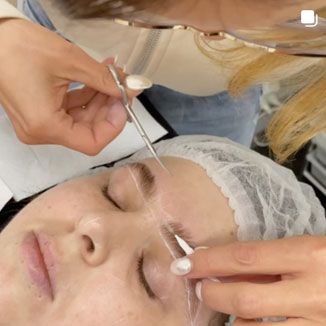
Professional waxing involves much more than applying and removing a product. It requires appropriate product selection, temperature control, skin support, precise placement, hygiene, and aftercare.
The lesson is not “put down the wax forever.”
It is “assess before you apply.”
So, When Does Threading Enter the Conversation?
Threading gives a brow professional another method to consider.
Using a twisted thread to catch and remove hairs, it offers detailed control without applying wax or heat. Some clients prefer it for eyebrow shaping or facial hair removal.
However, a client unsuitable for waxing does not automatically make her suitable for threading.
Threading is another technique—not a shortcut around contraindications.
It can still cause irritation or injury, particularly when technique or skin suitability is overlooked. Broken, infected, or significantly irritated skin should not simply be treated with thread instead. Where medication or a skin condition raises concerns, seek appropriate guidance before considering another method.
The professional question is not, “What can I do instead so this appointment still goes ahead?”
It is, “Is any hair-removal treatment appropriate today?”
Three Possible Outcomes—and All Can Be Professional
After consultation and assessment, your decision may be to:
- Proceed with waxing when it is appropriate for the client and the planned treatment.
- Consider threading when it suits the client’s skin, preferences, and treatment needs.
- Postpone hair removal when neither method is appropriate nor further advice is needed.
There does not always have to be a treatment at the end of a consultation.
Explaining why you are postponing a service can demonstrate the very thing clients are looking for: someone who takes their wellbeing seriously.
You might say:
“Your skin needs a little more consideration today. I would rather wait and confirm what is appropriate than perform a treatment that may not suit it.”
That is professional care- not a failed appointment.
Why Learning Both Techniques Adds Value
Learning waxing and threading gives you a broader range of practical skills and more ways to respond to client preferences.
You can offer wax-based and wax-free services, refine your approach to brow shaping, and make informed decisions within your training.
But having two techniques is only valuable when you understand the limits of both.
A well-rounded brow artist knows how to perform a service, explain the options, and recognise when a treatment should not proceed.
That knowledge is just as important as creating a beautiful arch.
Confidence Comes from Practice—and Knowing What to Look For
Watching a treatment online can make it appear effortless. What you may not see is the consultation, the skin assessment, or the small adjustments an experienced therapist makes throughout the appointment.
Hands-on training provides the opportunity to practise under supervision, receive feedback and develop control.
Whether learning wax placement or thread tension, students benefit from understanding not only what to do, but why they are doing it.
The goal is not to become faster at following the same routine with every client. It is to become more capable of adapting that routine responsibly.
Before You Touch the Wax, Start the Conversation
The most important part of a brow appointment may happen before any hair is removed.
Ask about skincare. Check medication and treatment history. Examine the skin. Listen to the answers.
Then decide.
Because your client is not simply trusting you to shape her brows. She is trusting your judgement.
Beautiful brows are the result. Professional judgement is what comes first.
Build Your Brow Skills at Ceecees Beauty and Training
Ready to develop your practical skills in a supportive, face-to-face learning environment?
Explore our Brow Waxing and Shaping Course and Threading Course at Ceecees Beauty and Training in Caulfield South, Melbourne.
Whether you are starting your beauty journey or adding another technique to your treatment menu, hands-on training can help you build your skills through guided practice.
Call 0452 337 164 or visit Ceecees Beauty and Training to enquire about our courses.
Learn the technique. Understand the client. Know when to proceed.
FAQs
Waxing may not be appropriate for clients using retinoids because these products can increase skin sensitivity. Check the client’s product use, timing and relevant professional guidance before treatment.
Clients taking isotretinoin should not have waxing treatments. If medication history creates uncertainty, postpone the treatment and seek appropriate guidance.
Threading is not automatically suitable simply because waxing is unsuitable. The client’s skin condition, medication, treatment history and current skin response should all be considered before hair removal.
Ask about current skincare products, medications, recent skin treatments, irritation and previous reactions to waxing or other hair-removal methods.